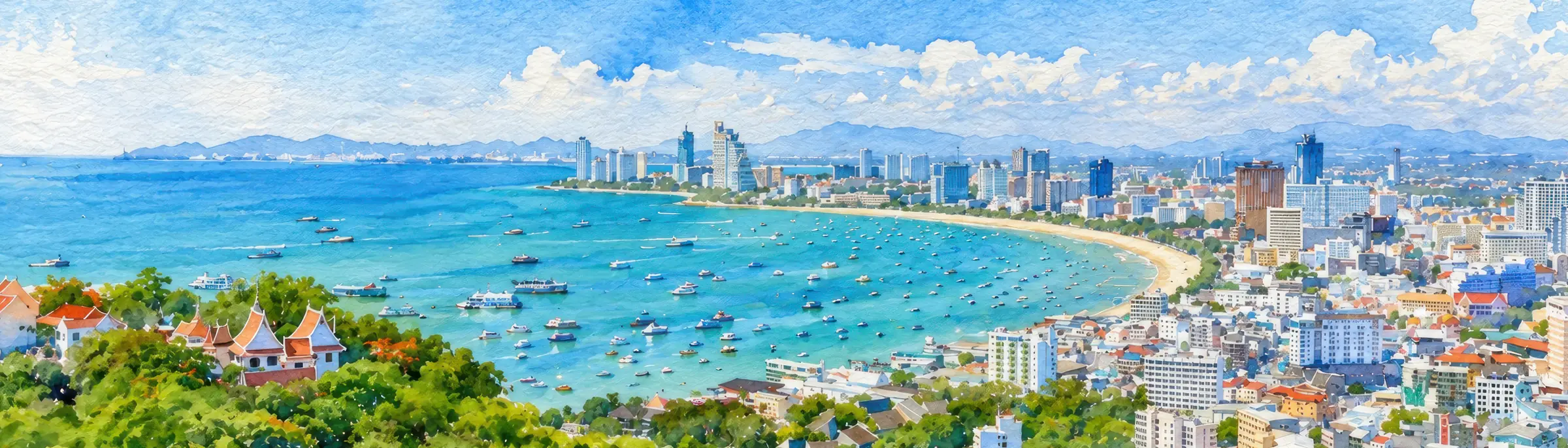
A rush shoot in Pattaya is a high-risk proposition. Time is tight, you choose the photographer in a hurry, you can’t compare portfolios properly, and there’s no margin for error. Most rush shoots go something like “we arrived yesterday, we leave the day after tomorrow, and we want a family photo” or “a guest flies in tomorrow and we need corporate portraits for a meeting.”
In that situation, most clients make the same mistake: they look for a photographer who says yes quickly and asks no questions. In practice, that’s a poor test. The best photographers for a rush shoot often take longer to reply (because they really are busy) and ask more questions (because they want to do the job well even in a tight window).
There’s a deeper reason. “I need it right now” or “I need it today” shows that the craft is being treated like a coffee to go — which it isn’t. Photography is a service that depends on genuine, unforced interaction, not on how fast the order ships. So when a rush request comes in, a strong photographer often slows down instead of jumping on it. For you, that’s a good thing.
What counts as a “rush” shoot
Under 48 hours before the shoot. If you message a photographer on Wednesday about a Friday shoot, that already counts as a rush job. Most professionals book one to two weeks out.
Under 24 hours: critically urgent. That’s “tomorrow” or “in a few hours.” Very few photographers are available, and almost all the professionals are booked.
Under 6 hours: an emergency. That’s “sometime today.” Only photographers whose schedule happens to be empty at that hour will take the job. Usually that means beginners, or someone whose other client has just canceled.
Urgency raises the price. That isn’t greed: the photographer is putting your job ahead of others, working at an inconvenient time, and going in with no time to prepare. A rush fee of 30–50% is normal. For an emergency job, expect 100%+.
What to check when time is short
When you have an hour to choose, you can’t go through every photographer’s whole portfolio. You have to pare the process down.
A real name. If the photographer works under a brand with no personal name attached, move on. A rush job with an anonymous brand is high risk. If the photographer botches it, there’s no one to track down afterward.
At least one link you can verify. A real website, a real Instagram account with a long history, a real MyWed profile. Without one, don’t book.
The date of the latest post or job. If the photographer last posted anything six months ago, they may not be actively working. Don’t risk it.
Follower count as a signal. It isn’t a test in itself, but it is a hint. Under 500 Instagram followers for a supposedly professional photographer is a poor sign. Over 5,000 in Pattaya is normal for an active photographer.
A reply within 30 minutes. If the photographer answers quickly during business hours, they’re available. If an hour passes with no reply, they’re either working or not checking their messages. For a rush booking, the second won’t do.
What a good reply looks like
A straight yes or no. No “maybe,” “possibly,” or “I’ll try.” A rush booking calls for precision.
A real schedule. “Tomorrow I’m free from 2:00 to 5:00 p.m.” is a real schedule. “We can figure something out” is fog.
A price that includes the rush fee. If the photographer doesn’t mention a rush fee, they’re either very cheap (which is suspicious) or not counting what the job really costs them.
A suggestion to adapt the plan. On a rush job, a good photographer will suggest trimming the plan: “In 1.5 hours we’ll do one location well, not three badly.” A weak one will agree to whatever you ask, and the result will show it.
A logistics checklist. Where to meet, what time, what to bring, what to wear. A photographer who gives no instructions is working on the “we’ll figure it out when we get there” principle.
Warning signs
A price that’s oddly low for a rush job. If a photographer accepts the standard rate for a shoot four hours from now, they’re either desperate (no other clients, a bad sign) or a beginner (a risk to quality).
A reply that comes too fast, with no questions. If the photographer answers within five minutes with a price already attached, without asking what you need, they’re working from a template. A rush shoot has to be tailored to the client.
No questions about the details. On a rush job, any experienced photographer will ask two or three key questions: who’s being photographed, where you’d like to shoot, what style you want. If there are none, they aren’t giving your job any thought.
Willingness to shoot at midday with no caveats. If you ask for 1:00 p.m. outdoors and the photographer agrees without a word about the light, they either don’t understand the conditions or don’t care.
A request for full payment in advance. A deposit is fine. The full amount four hours before the shoot, to someone you’ve never met, is suspicious. Better to agree on half now and half afterward.
What to do when there’s almost no time
If you have four hours to find someone, don’t hold out for the ideal. Choose from what’s available:
Option 1: A well-known professional who happens to be free. This is rare. If you find one, book them, even at a higher price. The quality will make up for it.
Option 2: A studio or an aggregator. They fill a rush request the simple way: they quickly ask every photographer on their list whether anyone is free. Whoever answers does the shoot, so the outcome is less predictable than it seems.
Option 3: A beginner with a ready-made offer. A low price, little risk (you don’t stand to lose much), and potentially a good result. This suits jobs where little is at stake: a family keepsake, a couples shoot for social media. It doesn’t suit weddings or corporate portraits for print.
What to avoid: booking through an aggregator without vetting the photographer yourself. Platforms like Airbnb Experiences sometimes offer “a photographer in 2 hours.” The quality is unpredictable, and the photographer could turn out to be anyone.
What reduces the risk
A contract in writing. It can be as little as a short WhatsApp or Line message with the terms: time, location, duration, price, the number of photos to expect, and the delivery date. It isn’t ideal, but it’s something.
A deposit, depending on the situation. For a small rush shoot in town, photographers usually don’t take a deposit at all (at most, one changes hands when you meet in person). If there is a deposit, don’t pay more than 30–50% up front; the rest comes afterward.
A backup plan. If you have 24 hours and the photographer doesn’t show up, you won’t have time to find another one. Have the photographer’s phone number, more than one channel for reaching them, and a way to get through by phone.
A meeting in person. If you can, meet the photographer an hour before the shoot rather than for the first time at the location. At the very least, have a video call. It lowers the risk that the person simply won’t show up.
Some jobs shouldn’t be rushed
Weddings. A wedding shoot booked at the last minute (a few days ahead) almost always ends in a compromise. Serious wedding photographers are booked months in advance. If your wedding is a week away and you still don’t have a photographer, you’ll get either a beginner or someone who’s had a cancellation, which often points to problems with their work.
Corporate portraits for an important presentation. Careful preparation is part of the genre. A rushed corporate portrait will come out looking like a vacation snapshot, not like professional work.
Real estate photography for a serious sale. The property has to be prepared, the light checked, and time allowed for HDR. Rush it and you get poorly prepared shots.
If the job matters, postpone it rather than rush it. Better to spend another week in Pattaya for strong photos than to end up with a set where nothing is worth keeping.
When a rush shoot is justified
A spontaneous family session. You’ve just arrived, the weather is good, the kids are in a good mood, and you want something to remember it by. A one-hour family shoot by the sea works fine at short notice.
A couples session as a surprise. One partner wants to give the other a present: a simple one-hour session. That works.
A simple proposal. Not the kind that needs the location and the timeline carefully prepared, just a plain record of the moment. That can be set up with a day’s notice.
A simple business headshot. If you need one photo for LinkedIn and have one free hour, that’s doable. It’s for everyday use, though, not for print.
A rush shoot in Pattaya is a real option, and sometimes a necessary one. But it isn’t a way to save money or to skip the planning. It’s work under constraints, and the result reflects them. A professional photographer says so up front. A weak one pretends they can handle any kind of shoot equally well.