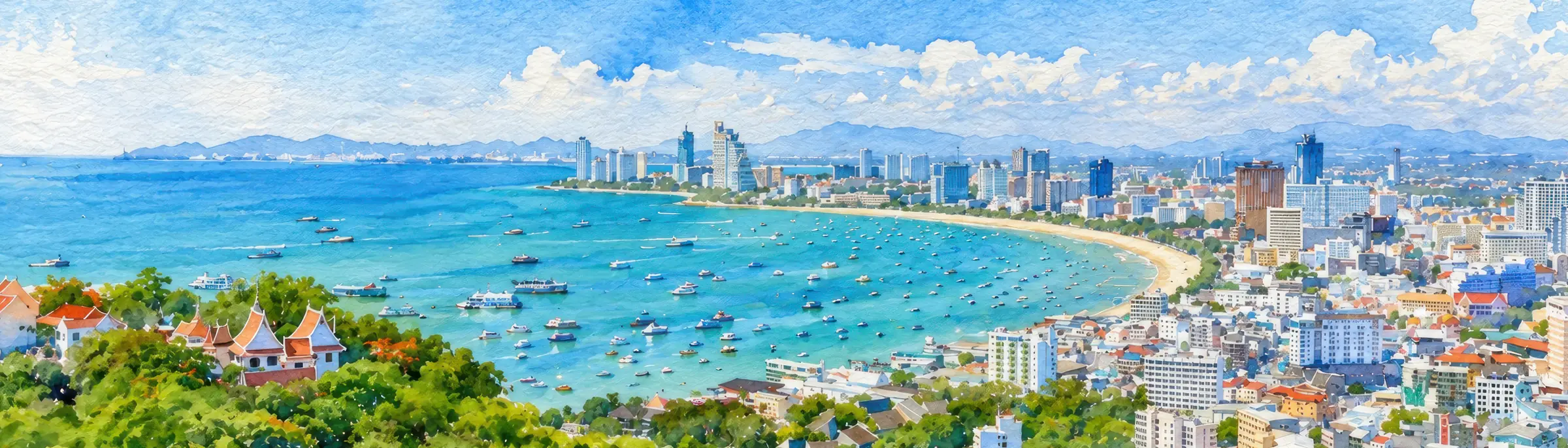
A resort wedding in Pattaya is usually a compact event: ten to thirty guests, one venue (a hotel or a restaurant), a short ceremony, dinner, and an informal end to the day. Big weddings with five locations and outfit changes are rare. That’s a wedding you hold at home, in your own city; people fly here for five days, not for a month of planning.
A short day doesn’t make the job simple. Quite the opposite: it’s a tight window in which a photographer’s mistakes can’t hide behind the number of shots or the length of the event. Not one of the thirty to forty key moments can be missed, and the quality has to hold throughout. A full-day wedding is a very different matter: there’s always time to reshoot or fix something.
What a wedding photographer must cover
Getting ready. The bride is getting ready, with the rings on the nightstand, the bouquet, the dress on its hanger, and the parents coming in for a look. This is the first part of the wedding, and many photographers botch it, shooting it either too formally (staged “detail shots” with no life in the scene) or haphazardly (with no structure). Good getting-ready coverage is 15–25 photos in 30–40 minutes, in three layers: details (rings, dress, bouquet, shoes), the process (makeup, final touches), and emotion (the bride with her mother, her father’s reaction).
The ceremony. The most important part, usually 15–25 minutes long. The photographer’s positioning is critical here: where they stand, how they move, whether they catch the guests’ reactions. A well-shot ceremony in a portfolio has more than the couple in it: the guests’ faces, a close-up of the ring exchange, parents in tears, a friend smiling. If the portfolio shows only the couple in front of the officiant, the photographer works from one spot and misses half of what happens.
Family groups. The least loved part of a wedding: the formal group portraits with parents, relatives, and friends. It takes organization (a list of groups drawn up in advance), speed (fifteen groups in twenty minutes), and skill with light. In Pattaya wedding portfolios this part is usually weaker than the rest: many photographers shoot the couple well but stumble on the group shots. If a portfolio has no group shots at all, that’s a sign that the photographer avoids them or that clients aren’t happy with them.
Couple portraits. Usually taken after the ceremony, at golden hour. This is the part where the photographer is free to choose the location, the time, and the poses. It shows their style and vision. But it shouldn’t be the only strong part: otherwise all that’s left of the wedding is posed sunset shots, and the event itself is poorly documented.
Reception and dinner. A hard part to shoot: mixed lighting (decorative lights, candles, natural light from the terrace), people moving around unpredictably, toasts, dancing, emotion. You usually can’t get by without flash here. If the evening shots in a portfolio come out flat or noisy from high ISO, the photographer doesn’t use flash, and the evening part of your wedding will look the same.
What makes shooting a wedding in Pattaya different
Light. Most weddings in Pattaya are held at open-air venues: a hotel beach, a restaurant garden, a terrace overlooking the sea. That means daytime sun, wind, sometimes rain, always humidity. The light changes fast: harsh at 4:00 p.m., golden at 5:30, blue at 6:00, dark at 6:30. Those are the times for November and December; in July the sun sets almost an hour later. A photographer who has only ever shot weddings in studios or indoor venues will be lost here.
Timing. This is where things go wrong most often. Thailand is relaxed about punctuality: running 15 minutes behind doesn’t count as being late, and over a day those delays add up to half an hour or an hour. The sunset portraits by the sea are the first to suffer — and a Pattaya wedding almost always has them. The catch is that sunset here is short: the sun drops below the horizon in a matter of minutes (unlike in Northern Europe, where it sinks slowly), and the whole window for the shot with the sun low over the water is about fifteen minutes. A European photographer without local experience underestimates how much those delays cost: back home they had an hour for the same shot; here they get a quarter of that. So an experienced photographer builds in a buffer and keeps 20–30 minutes in reserve, before or after dinner, for the sunset portraits.
Guests. At a resort wedding the guests have often flown in for a day or two: they’re mid-trip, tired, in clothes they aren’t used to. They’re less “camera-ready” than they would be at a wedding at home. The photographer has to know how to work with real faces: slightly sunburned, tired, not quite put together. If the guests in a portfolio look like professional models in every shot, the set has been retouched or only the best moments have been picked.
Languages. At many Pattaya weddings the couple is one nationality, the guests are another, and the officiant is Thai. The photographer has to direct people in at least two or three languages. It’s a mundane detail, but an important one.
What to look for in a portfolio when the wedding is short
A whole wedding, not a best-of. A strong wedding portfolio shows several weddings from start to finish: getting ready, ceremony, portraits, reception. If the portfolio is only hand-picked “best shots” from different weddings, there’s no way to tell how the photographer holds up over the full length of the day.
Guests as part of the picture. A good wedding photographer shoots the people around the couple too. A grandmother crying, a friend of the bride pulling a funny face, a mother straightening her daughter’s veil: those shots are worth more than the posed couple-under-the-arch ones.
Low light. Look for evening and night shots from the reception. If they’re there and they’re good, the photographer works with flash and knows what they’re doing. If the evening shots in the portfolio look noisy and dark, the reception at your wedding will look the same.
Editing style. Wedding editing should be restrained, or the photos will look dated in ten years. If the portfolio has overly warm, creamy tones, a fake-film vintage look, or contrasty “trendy” color, that’s a style for one season, not for a wedding album.
What to discuss in advance
The structure of the day: a written list of the key moments. Where and when the bride gets ready, and who will be there. What time the ceremony starts, where, who’s officiating, whether there are any special traditions. After the ceremony: group portraits, couple portraits, a walk with the photographer. The reception: where, in what format, toasts, dancing. This isn’t bureaucracy — it’s the plan the photographer works from.
The list of group portraits: who has to be photographed with whom. The bride with her parents, the groom with his, the couple with both sets of parents, with brothers and sisters, with all the guests, with close friends. Without a list these shots either get forgotten or turn into a scramble.
Style: posed or documentary. Most photographers in Pattaya do one or the other. If you want classic posed “wedding portraits,” you need one kind of photographer. If you want reportage, you need another. Some photographers do both, but they’re rarely equally strong in each.
The number of finished files and the turnaround. A wedding shoot usually comes to 200–400 final images. If the photographer promises 800, they’re handing them over with minimal editing. If it’s 100, the selection is too strict and parts of the day won’t be covered. Turnaround runs from two weeks to two months, depending on how busy the photographer is. “Ready in three days” means either very fast editing (which raises questions about quality) or an unrealistic promise.
What a portfolio can’t show
Behavior under pressure. If the ceremony runs late, it starts to rain, the couple argues just before their entrance, and the guests are late, how does the photographer handle it? You can’t tell that from the photos. When you write to the photographer, ask about a time things got difficult. Someone experienced will give you specifics; a beginner will answer in general terms.
Handling revisions. After the gallery is delivered, a couple usually asks for a few photos to be fixed: the photographer taken out of a reflection, a face brightened, a different crop. How fast and how willingly the photographer does this matters in its own right. When you write, ask how many revisions are included in the price and how quickly they’re done.
A wedding in Pattaya is small in scale but not in importance. A short day doesn’t mean cheap work. If a photographer quotes well below the market average, either they’re working the way they would on a quick vacation shoot or they have little experience with weddings. Neither will do for a day you only get once.