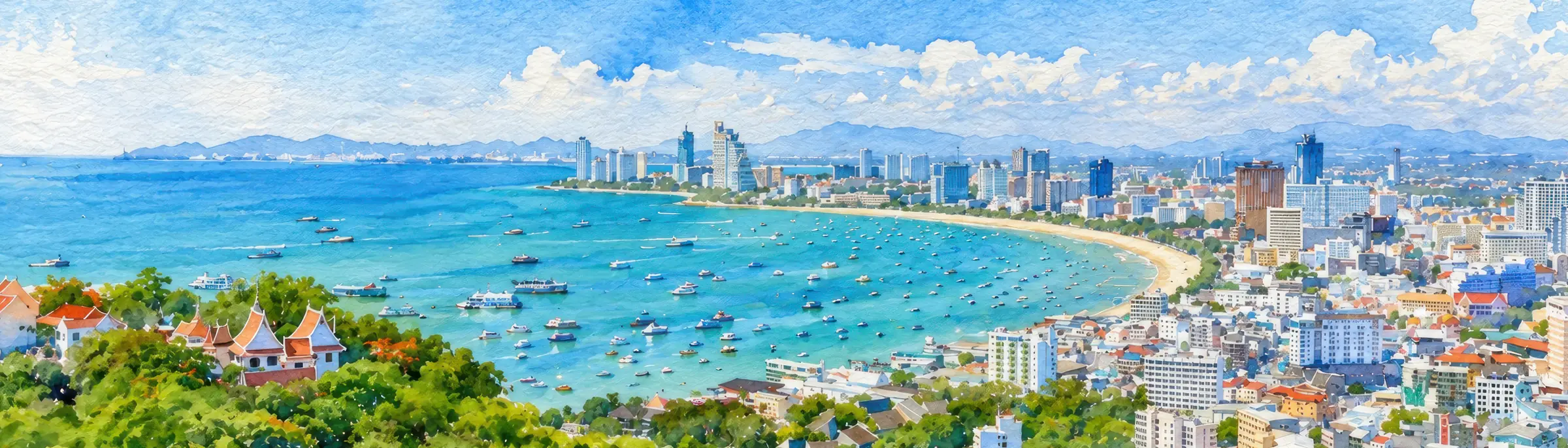
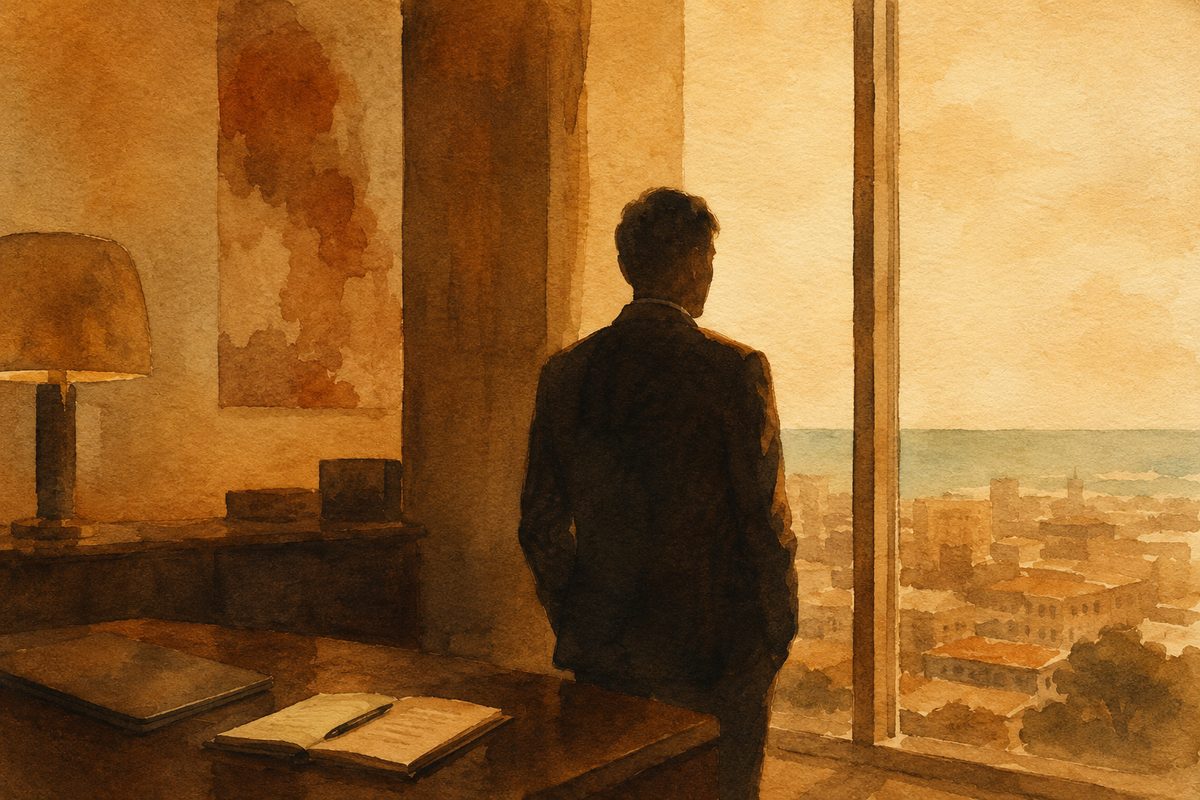
A business portrait in Pattaya is a genre of its own, and most local photographers shoot it badly. The trouble isn’t technical skill: they confuse a business portrait with a glossy resort portrait, so the client ends up with “me on vacation” rather than a picture of themselves as a professional.
These are two different jobs. The glossy Pattaya portrait is you on the beach at sunset, maybe with the sea behind you, in light-colored clothes, relaxed. A business portrait is you as someone who can be trusted with a service, a project, or a negotiation. The background can be Pattaya, but it shouldn’t shout “vacation.”
At a deeper level, the job of a commercial portrait is to show the person in the most interesting way, not to take the most interesting picture. So the look, as long as it stays flattering, should fit the client: their temperament, the clothes they really wear, the settings they are comfortable in. This isn’t about the photographer’s self-expression; what shows is the client, the way they want to be seen.
What’s wrong with most local portraits
Vacation light. Soft sunset light off the sea is ideal for a couple or a family and bad for a business portrait. It suggests leisure, relaxation, a setting that has nothing to do with work. A business portrait works better in more neutral light: an overcast day, the shade of a building, the artificial light of a studio or a conference room.
Vacation pose. Seated, relaxed, sometimes with a drink in hand or barefoot: these are the trappings of a vacation, not of work. A business portrait calls for different body language, with a steady stance, an open posture, a direct gaze, and hands that are busy or at rest (not in pockets).
Vacation clothing. An unbuttoned linen shirt, white clothes, a lazy beach look. For some professions (tourism, wellness, diving) this works; for others (a lawyer, a consultant, a doctor, an IT consultant, an investor) it’s a disaster. The photographer should ask ahead of time, while you’re still exchanging messages, which field the portrait is for, and suggest what to wear.
Vacation background. Palms, a pool, the sea, a hotel lobby bar all say vacation. They’re fine for a lifestyle portrait, but in a business context they cast the person as “someone who lives at a resort” rather than “someone who works in Pattaya.” The difference is subtle, but clients pick up on it.
What a business portrait needs
The face in focus. The face, not the city. The viewer should take in the person at once. That means a neutral or slightly blurred background, lighting that brings out the features, and a shooting distance close enough to see the eyes.
Two or three shots that do the job. A business set usually needs one main portrait (head-on or nearly so, from the chest or the waist up) and one or two extra shots: a different angle, one in your working environment (at your desk, in the office), one in action (talking to someone, holding a tool of your trade). You don’t need a big set of posed pictures — this isn’t a modeling shoot.
Matched to how it will be used. A portrait for a company website can be square or rectangular, and you need both a close-up and a waist-up shot. For LinkedIn it should be a close-up against a neutral background. For a print publication you need high resolution and a print-ready file. The photographer should check this in advance.
Restrained retouching. A business portrait can’t be “edited to look like analog film”: it will look dated within a year. What it takes is basic color correction, light skin smoothing, and removing a stray highlight. No stylized filter, no aggressive color grading. If every portrait in a photographer’s portfolio has the same heavy edit, the photographer works in one style, and your business portrait will get that style too (which is often not what you need).
Where to shoot in Pattaya
The main point is also the unexpected one: you hardly need a special “business” location for this, because a business background is a matter of technique, not of place. Almost any large café (a table, a laptop, a quiet backdrop) plus a moderate telephoto lens used from a short distance will separate the person from the background and take the signs of a resort out of the frame. That’s enough for a portrait that does its job.
Your own office or workspace, if you have one, is a convenient option but not a necessary one (the context is ready-made, and a studio flash supplements the available light). The lobbies and meeting rooms of business hotels, or a modern city facade, will also do. A beach, an outdoor pool with loungers, a bar counter with a drink, and palms in close-up are another matter: that’s a glossy resort shoot, not a business one. If the sea has to be in the background, keep it in the distance behind your shoulder, not in the center of the frame.
Pattaya has studios too, mostly wedding studios, though many also take on portrait and product work in the style you need. This is often where Thai photographers are strong: they work confidently with studio strobes. Outdoors the same lights let many of them down, because the burst of flash can’t be seen while the light is being set up, and the exact lighting has to come together in the photographer’s head beforehand. There are also self-service studios with no photographer, at around 2,000 baht an hour: if you feel you can take the picture yourself — even on a phone — that’s a workable option for a simple business portrait.
What a portfolio tells you
Corporate portraits. The portfolio has real business portraits in it: men and women in business dress, a work setting, a neutral background. If it doesn’t, the photographer specializes in vacation shoots, and your portrait will come out in the same style.
A range of professions. A good business portfolio covers different fields: finance, technology, doctors, lawyers, consultants. If every client in it comes from one industry (only wellness, say, or only real estate agents), the photographer works in a narrow style.
Sets for one client. A strong business photographer usually shoots a package, not a single picture: the main portrait, variations on it, shots in a working setting. In a portfolio this shows up as sets of 3–5 photos of the same person.
Studio work in the repertoire. If the portfolio includes studio portraits on a white or gray background, it’s a sign that the photographer works with controlled light as well as natural light. That matters for a business portrait, because a studio often gives a better result than a city location.
What to discuss before the shoot
The purpose. A company website, LinkedIn, a print publication, a presentation, corporate materials. This decides the format, the resolution, and how formal the portrait should be.
Your field. Finance and law call for the most restrained look. Startups and IT allow something a little more casual. Wellness and the creative professions can take a beach setting. A photographer who doesn’t know your field will shoot an “all-purpose portrait,” which is usually weaker.
Clothing. The photographer should give recommendations in advance: which colors work best, a jacket or a shirt, whether you can skip the tie, whether to bring a spare outfit. If the photographer writes back “come in whatever you like,” that’s a sign they aren’t thinking about what a business portrait needs.
Location. A studio, your office, a hotel, somewhere in the city. It’s better to settle this in advance than to choose on the day.
Quantity. How many finished photos you need: one main portrait and a couple of extras, or a large package of options. One main portrait is usually enough for most purposes; a large package is for a serious rebrand or a company website.
Cost
A business portrait is not a more expensive genre. Essentially it’s the ordinary work of photographing people, and the rate is the same as for a portrait session: what differs is technique and approach, and no “corporate” premium comes with it. In Pattaya that means the same range as a one-hour portrait shoot, from roughly 1,000 baht up to 5,000–10,000 per session, depending on how much you need and whether studio lighting is required.
If you’re quoted noticeably more for a “business portrait” only because of the word “business,” you’re paying for the label, not for the work. If the price is well below the market, you’ll most likely be shot the way tourists are, and the result will match.
What portfolios don’t show
The ability to work with people who aren’t models. Most people who need a business portrait aren’t used to the camera and stiffen up in front of it. The photographer has to know how to get them talking, build the pose, and take the tension away. You can’t see this in a portfolio (it shows the finished result, not the process), but it shows in your exchange of messages: does the photographer ask questions, explain what will happen, allow for several takes?
A business portrait is not the most common job for photographers in Pattaya, and many who offer the service shoot vacation portraits with a business label on them. If a business result is what you need, look for specific business portraits in the portfolio; the words “I do business portraits” are not enough here.